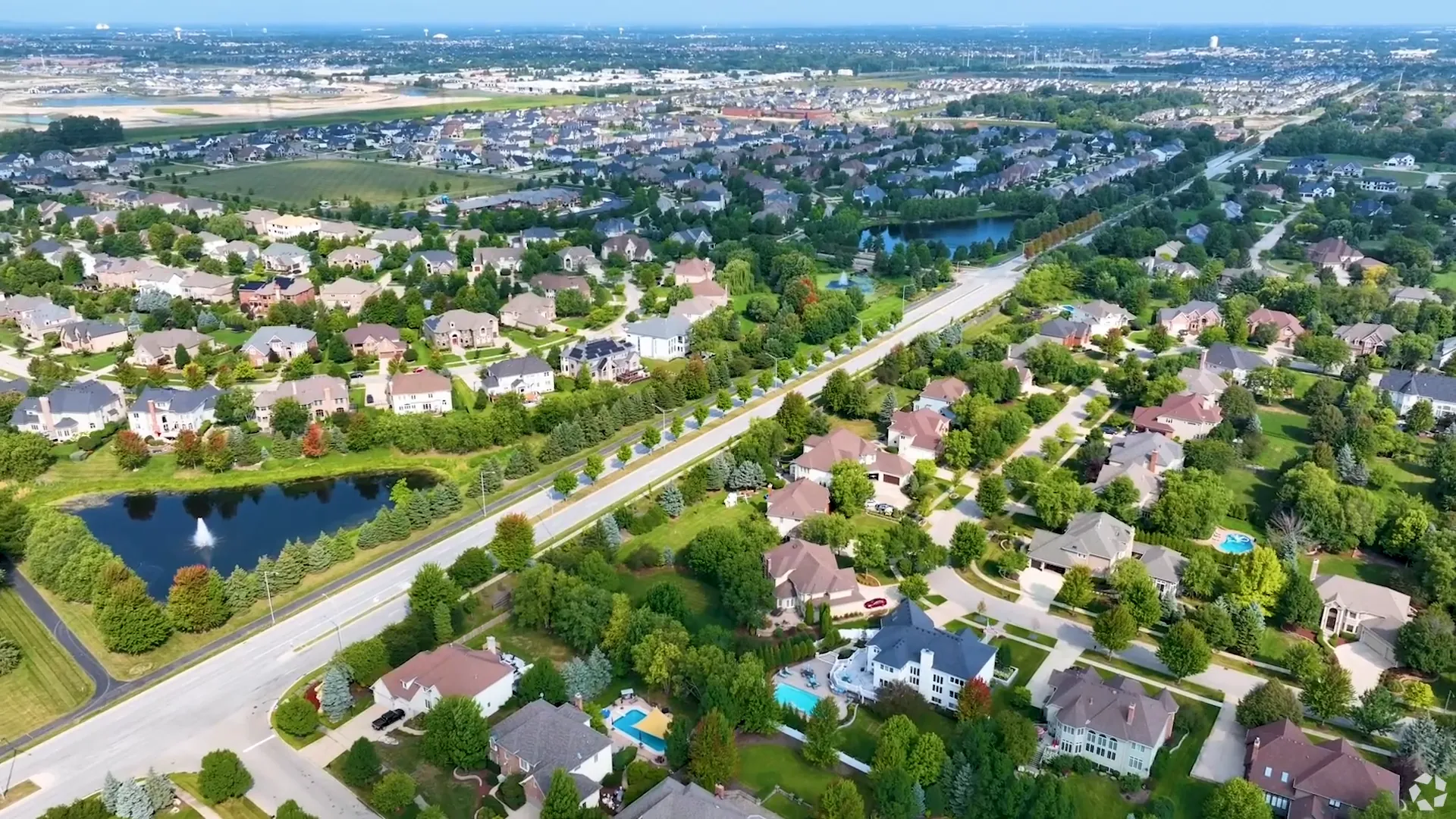
Established & central
- Feel Older, in-town neighborhoods
- High schools Naperville Central & North
- Area North & central Naperville
- Commute Closer to Metra & downtown
Schools, neighborhoods, cost of living & commute — mapped out for your family.
You're somewhere between “Naperville keeps showing up on every list” and “we're actually doing this.”
Maybe you're relocating from the city for more space and better schools. Maybe a job is moving you here from out of state and you've never set foot in Illinois. Either way, you've done the Zillow scrolling and read the rankings — and now you need the ground-level intel no algorithm gives you.
That's what this is. Not a brochure. A straight, useful breakdown of how Naperville actually works — where to live, which school district your address falls in, what your money buys, and what the move really costs month to month.
Read it. Take notes. Use the tools. And when you're ready to talk — about a neighborhood, a district line, a commute, or just whether Naperville is the right call — you know where to find me. I answer my own phone.
— Moses Bonilla · Keller Williams Preferred Realty
Same town-by-town, district-by-district breakdown for St. Charles, Geneva, Batavia, Oswego, and the growth corridor. A lot of families end up weighing both.
Most suburbs are great at one or two things. Naperville checks schools, safety, lifestyle, value, and commute access all at once — which is rare, and why families from Chicago and the coasts keep landing here and stop looking.
World-class schools. Both District 203 (north and central) and District 204 / Indian Prairie (south and west, extending into Aurora) rank among the top districts in Illinois and the country. Which district your specific address falls in is the single most important thing to get right — Chapter 4.
Safety and stability. Naperville consistently ranks among the safest cities of its size in the country. For families leaving denser areas, that stability — low crime, well-funded services, a stable tax base — is often the quiet thing that seals the decision.
A real downtown. 400+ restaurants and shops, the Riverwalk threading through the middle of it, and year-round events. It functions less like a strip mall and more like a small city's core.
Value for the dollar. Naperville isn't cheap — but against what your housing dollar buys in Chicago proper or a coastal metro, the space, schools, and lifestyle still surprise most people relocating in.
Rankings, tax figures, and price ranges here come from public sources (Niche, Redfin, Zillow, MLS, county assessor data) and shift over time. I'll confirm current numbers for your specific search before any decision.
Want to talk through whether Naperville fits your family's budget and timeline?
Book a free 30-min strategy call →The sticker price is the part everyone sees. The part that surprises relocating buyers — especially from low-tax states — is the monthly carry: principal, interest, taxes, and insurance combined.
Illinois property taxes are high relative to much of the country. In the Naperville area, effective rates generally land in the 2.0%–2.5% range depending on the taxing district. On a $600,000 home, taxes alone can run $12,000–$15,000 a year — roughly $1,000–$1,250 a month before you've touched the mortgage.
That's not a reason to walk away. It's a reason to plan with the real number from day one. Buyers who budget on price alone end up house-rich and cash-tight. Buyers who budget on monthly carry land in the right home with room to breathe.
Eight areas that cover the range — from walkable historic streets to master-planned communities with resort amenities, across both school districts and a real price ladder. One principle first: the neighborhood sets the district. Schools first, then the home inside the boundary.
| NeighborhoodThe read | DistrictFeeder | Price rangeApprox. | Best forWho it suits |
|---|---|---|---|
| Downtown / Historic | 203 Central | $550K–$1.3M+ | Walkability & character, will pay for it |
| East Naperville | 203 Central | $380K–$650K | Established D203 without heavy HOA |
| Cress Creek | 203 | $500K–$950K | Premium central, country-club adjacent |
| Hobson West / Knoch Knolls | 203 | $450K–$750K | The D203 advantage, more accessible |
| Ashbury | 204 Neuqua | $450K–$750K | Amenities included, tight community |
| Tall Grass | 204 Neuqua | $500K–$900K | Resort-style, planned-community feel |
| Wheatlands / Stonebridge | 204 Neuqua | $475K–$850K | Master-planned structure & amenities |
| White Eagle | 204 | $600K–$1.1M+ | Premium golf-course community |
Price ranges are representative reads of each market, not appraisals; school feeders are general references. Boundaries cut across neighborhoods — always confirm the exact district for a specific address. Text me and I'll check the parcel.
Schools first, then the home inside the boundary. Always. We start with the district, then find the right home within it — not the other way around.
Two elite districts, one city, and one question that changes everything: which district is your home in? Both 203 and 204 are excellent. The right answer depends on your family — not a ranking.
Both districts are excellent. The real differentiation is which high-school feeder path matters to you and which neighborhoods fall in your budget within each district. That's a conversation, not a chart — let's have it.
Private & higher ed nearby: Benet Academy (Lisle), Montini Catholic (Lombard), North Central College (downtown Naperville), and Benedictine University (Lisle).
Naperville's commute story is a quiet advantage — but the right answer depends entirely on where you work and how often you go in.
The train (Metra BNSF). Two stations — downtown Naperville and Route 59 — on one of the busiest, most reliable lines into Union Station. Express trains reach the Loop in roughly 35–45 minutes. Going downtown a few days a week, you read or work on the train instead of fighting the expressway.
The expressway (I-88 / Reagan Memorial Tollway). I-88 is the spine of the western suburbs and the heart of the corporate corridor — tech, telecom, finance, healthcare, research from Naperville through Lisle, Warrenville, and Oak Brook. For a huge share of relocating professionals the job is out here, which makes close-to-I-88 more valuable than close-to-Metra.
The work-from-home reality. Hybrid schedules rewrote the math. In the office one or two days, you can live farther from the train and prioritize schools, space, and price. In four or five, station proximity earns its premium. The right neighborhood depends on your real schedule — not a generic rule.
This isn't a tourism brochure. Here's what residents actually do — the center of gravity that turns “good on paper” into “this is home.”
Each costs months, thousands of dollars, or both. Every one is avoidable.
The “Naperville” mailing address that's actually in a different district. The dream home in the wrong feeder path. Start with the boundary, not the listing.
Illinois taxes turn a comfortable price into a tight monthly number if you don't plan for it. Know your real carry before you tour.
In a competitive market the buyer who can move fast wins. Out-of-town buyers who show up un-approved lose homes to locals who are ready.
The agent on the sign works for the seller. Your own representation often costs you little or nothing — we negotiate for the seller to cover my fee, and you'll know your exact number upfront — and it puts someone on your side for price, inspection, and terms.
The well-priced home in the right district doesn't sit. Families who treat the search as casual until they're “ready” miss the homes that actually fit them.
Six months out to move week. A long-distance move works when it's sequenced — here's the rhythm.
Budget by monthly carry, not price. Get pre-approved with a lender who knows Illinois tax math. Narrow target districts and 3–5 neighborhoods, and start watching inventory to calibrate.
Visit if you can — tour neighborhoods, not just homes. Confirm school boundaries on your top streets. Lock in your buyer's agent and a clear search plan.
Pre-approval current, funds in place. Move quickly on the right home with your team lined up. Schedule inspection and align the timeline to your move date.
Confirm utilities, school registration, and address changes. Final walkthrough and close — in the right home, in the right district, on plan.
Relocating from another state changes the strategy — not the outcome. Buyers do this successfully every week. Done well, being out of state is a non-issue.
The only things that change when you're remote: someone reading listings for accuracy, running school-boundary checks before you fly in, touring on video, negotiating with sellers who know you're not local, and making sure you don't land in the wrong district by accident.
For out-of-state buyers, I run: live video tours of homes and neighborhoods before you book a flight; school-boundary confirmation on every candidate street; a neighborhood-fit shortlist so your one trip is efficient; offer and negotiation strategy built for the local market; and a move-week timeline coordinated to your relocation date.
The one thing to do early: get pre-approved with an Illinois-savvy lender before you tour. The biggest disadvantage isn't distance — it's showing up un-ready in a market where the right homes move fast.
Let's set up a call before you book any flights.
Book a free 30-min call →Every link you'll need. Always verify current details — schedules, boundaries, and tax rates change.
Don't let anything slip. Run these top to bottom.
St. Charles, Geneva, Batavia, Oswego, and the growth corridor — same district-by-district, carry-not-price approach, with the county tax differences that make the Fox Valley its own decision.
Buyer's remorse almost never comes from the house. It comes from the district, the commute, or the carry you didn't fully understand. Slow down on those, and the rest falls into place.
That's the part I obsess over for you. Most agents won't.
Don't just relocate to Naperville. Land in the right place.
100% free. No obligation. No sales pitch.