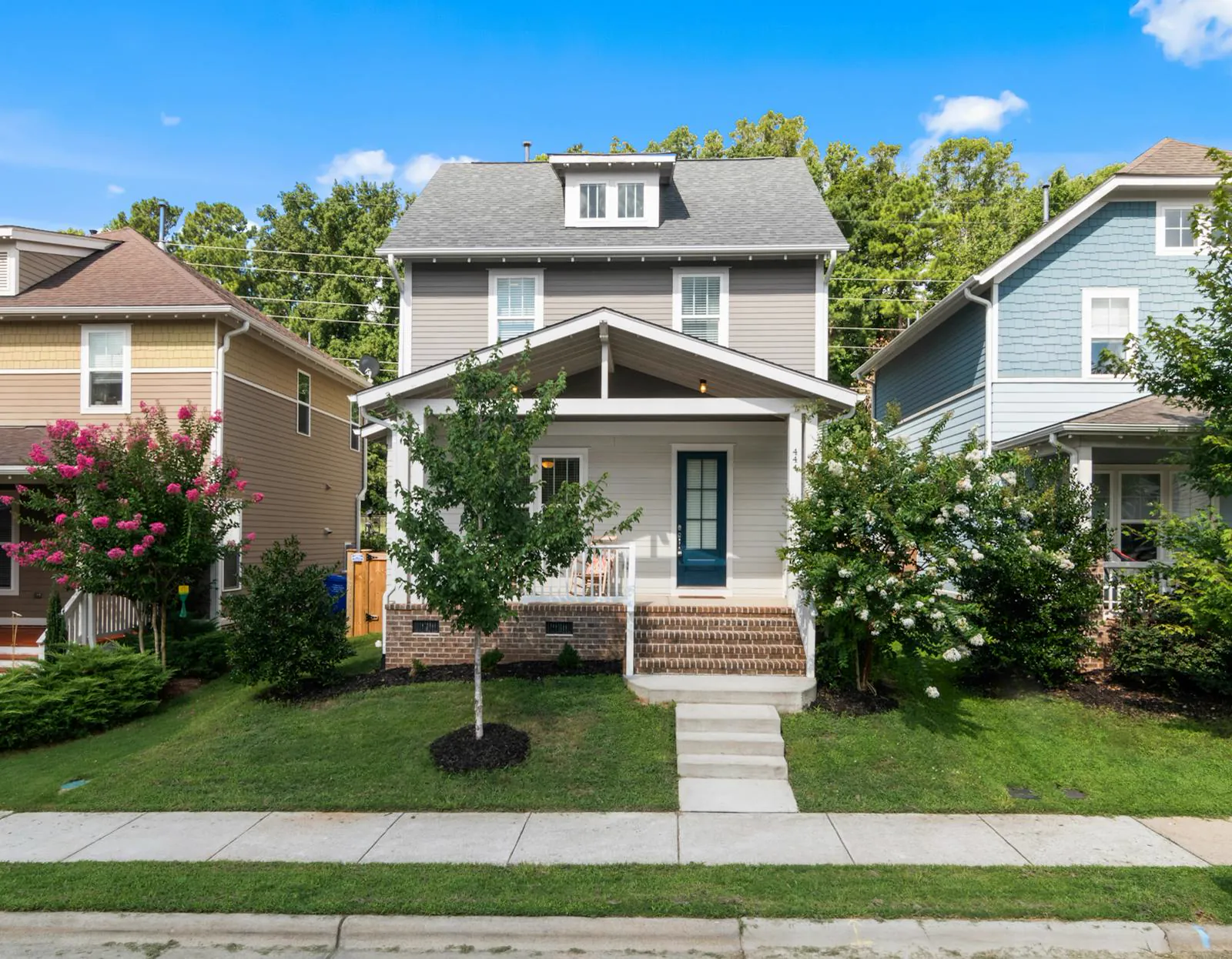
Moving to Plainfield
District 202, the honest commute, new construction vs. character — and everyday life, mapped out for your family.
You're somewhere between “Plainfield keeps coming up for the space and the price” and “we're actually looking out here.”
Plainfield is one of the fastest-growing towns in the western suburbs for a reason: it's where a lot of families finally get the room, the yard, and the newer home their budget wouldn't stretch to in Naperville — without leaving strong schools behind. That's the headline. The details are where the decision actually gets made.
So this is the straight version — how Plainfield really works. What your money buys (new construction and established homes), the one giant school district and why the specific address still matters, the honest truth about the commute, and what daily life is actually like once the boxes are unpacked.
Read it. Take notes. Use the tools. And when you're ready to talk — a subdivision, a school boundary, a commute, or just whether Plainfield is the right call — you know where to find me. I answer my own phone.
— Moses Bonilla · Better Homes and Gardens Real Estate Connections
Eleven chapters. One honest read.
- Why PlainfieldWhat's actually driving the move
- The Real Cost of LivingWill County tax & monthly carry · Tool
- Homes & NeighborhoodsNew construction vs. character — your call
- Schools — District 202One giant district · Boundary Checker
- The Commute — Straight TalkThe real trade-off · Commute Estimator
- Things to DoDowntown, trails, the river, the table
- What's Here — Everyday LifeShopping, groceries, gyms, the basics
- The 5 Buyer MistakesEach one costs months or thousands
- Your Relocation PlaybookSix months out to move week
- New Resident Resource HubEvery link you'll need
- The Complete Move ChecklistDon't let anything slip
Why Plainfield
Plainfield sits in Will County (with a sliver in Kendall), about 35 miles southwest of the Chicago Loop, with I-55 two miles out and Route 59 running through the middle of it. It's where a lot of families come for newer, larger homes and strong schools at a price the closer-in suburbs stopped offering.
Space and value for the dollar. This is the honest headline. Plainfield's median home value runs in the high-$300s, and new construction generally starts in the high-$200s to low-$300s and climbs into the $700s. For families priced out of Naperville, the same budget buys a bigger, newer home — often with a yard and a two-bay-plus garage.
One large, well-regarded school district. Almost all of Plainfield feeds Community Consolidated School District 202 — one of the largest districts in Illinois. It's a genuine draw for families across the southwest suburbs, and it's covered in full in Chapter 4 (including why "the district" still isn't the whole story).
A real historic downtown. Lockport Street is a walkable, four-block historic district with restaurants, small shops, and the DuPage River running alongside — not a strip mall pretending to be a downtown. More on it in Chapter 6.
Room to grow into. Plainfield is still building — master-planned subdivisions, new park sites, new retail along Route 59. If you want a newer home in a community that's still adding amenities, that growth is a feature. (It comes with trade-offs too — I'll name them.)
Prices, tax rates, enrollment, and school ratings here come from public sources (Village of Plainfield, District 202, Will County, Ownwell/Redfin/Zillow, Forest Preserve District of Will County) and shift over time. I confirm current numbers for your specific search before any decision.
Want to talk through whether Plainfield fits your budget and timeline?
Book a free 30-min strategy call →The Real Cost of Living
The lower sticker price is what draws people to Plainfield. The number that surprises them — especially buyers coming from lower-tax states — is the monthly carry: mortgage, taxes, and insurance combined. In Illinois, the tax line does a lot of the talking.
Plainfield's effective property-tax rate generally lands around 2.5% of market value on the Will County side; the small Kendall County portion tends to run a bit higher. On a $450,000 home, that's roughly $11,000–$12,000 a year in property tax alone — on the order of $950–$1,000 a month before you've touched the mortgage.
That's not a reason to walk away — it's a reason to plan with the real number from day one. A newer, larger Plainfield home can still carry cheaper monthly than a smaller home closer in. But two similar-looking houses can carry very differently depending on the exact taxing districts and whether a new-construction assessment has caught up to the finished value yet. Budget on carry, not sticker.
Homes & Neighborhoods
Plainfield gives you a real choice most towns can't: brand-new master-planned homes and established homes with character. Here's the honest part — new isn't automatically better. Some older and custom homes here look and feel better than a new build at the same price. It comes down to preference and what your dollar gets you.
New construction. Plainfield is one of the most active new-build markets in the western suburbs — roughly a dozen-plus communities selling at any given time. You get the modern layout, the warranty, and the ability to spec it. The trade-offs are the ones every new-build buyer faces: the builder's sales office works for the builder, upgrades add up fast at the design center, HOA or SSA (special service area) dues are common, and the tax bill can jump once the finished home is reassessed. That's exactly the stuff I sit in on with you — see the companion New Construction Guide.
Established & custom homes. Closer to and around historic downtown, and in the earlier subdivisions, you'll find mature trees, bigger lots, and homes with real character — sometimes a better feel for the money than a new build, sometimes needing updates. This is where "it's all preference" is truly the answer. My job is to show you both honestly so you choose on fit, not on the shiny model home.
A note on subdivisions. Plainfield is a patchwork of named communities — established master-planned neighborhoods like Grande Park, and newer ones still delivering homes such as Springbank and the large Wallin Woods development off Route 126. Amenities, dues, and school feeders vary from one to the next, so the subdivision matters as much as the house. I'll map the ones that fit your list.
Not "new or resale?" but "which home carries well, sits in the right feeder, and actually feels like yours?" We'll tour both kinds side by side before you decide.
Register me first, or lose representation
On new construction, if you walk into the builder's sales office alone and hand over your info, you can forfeit your right to independent representation — at no savings to you. The price is the same either way; the only question is whether someone is reading the contract and watching the upgrades for you.
Subdivision names, builders, price points, and dues change as communities sell out and new ones open. Treat these as a snapshot, not a listing — I'll confirm what's actually available and how each one carries.
Schools — District 202
Plainfield doesn't have a "203 vs. 204" decision like Naperville. Almost the whole town feeds one district — Plainfield CCSD 202 — which is both simpler and its own kind of tricky.
It's big — one of the largest districts in Illinois. District 202 serves roughly 25,000 students across a 64-square-mile area that reaches beyond Plainfield into parts of Joliet, Crest Hill, Lockport, Bolingbrook, and Romeoville. It runs four high schools (Plainfield Central, North, South, and East), seven middle schools, and seventeen elementary schools. It's consistently regarded as one of the stronger large-suburban districts in the metro.
Because it's one district, the "which town" game changes. You're not choosing between districts — you're choosing your feeder pattern within 202: which specific elementary, middle, and high school a given address is assigned to. Those can differ meaningfully across a 64-square-mile footprint.
And boundaries move. A district this large rebalances attendance boundaries as new subdivisions fill in — District 202 adjusted boundaries as recently as early 2026. So the school a home "is in" today is worth confirming for the exact address, not assuming from the neighborhood name.
The Commute — Straight Talk
Here's the honest trade-off for Plainfield, and I'd rather you hear it from me than find out after you move: Plainfield does not have its own Metra station. The space and the value are real — and this is what you're trading for them.
To the train. If you ride Metra downtown, the nearest station is Route 59 on the BNSF line (on the Aurora/Naperville border) — roughly a 15–20 minute drive from Plainfield, then about an hour-plus into Union Station. Door-to-door, plan on the better part of an hour and a half each way. That's the number to be honest with yourself about if you commute downtown daily.
By bus. Pace runs express service — routes 755 and 855 — from the Plainfield Park-n-Ride to downtown Chicago, and they can run on the shoulders of I-55 to skip some of the jam. For the right schedule, it's a genuinely useful option that a lot of people overlook.
By car. I-55 is about two miles from town, putting you ~35 miles from the Loop and with quick access toward the I-88 corporate corridor and Joliet/Naperville job centers. If your job isn't downtown — and for a growing share of Plainfield families it isn't — the commute math flips entirely in Plainfield's favor.
The tool below gives you the real door-to-door time and a true monthly cost for your situation — including the drive-to-the-train leg most estimates quietly skip.
Work downtown five days a week? Plainfield's commute is the real cost — go in with eyes open. Work remote, hybrid, or out here? The trade-off nearly disappears and the value is pure upside.
Things To Do
The part a spreadsheet won't tell you: what a good Saturday actually looks like. Plainfield's answer is a walkable historic downtown, the DuPage River threading through town, and a genuinely strong trail-and-preserve system.
Historic Lockport Street. Downtown Plainfield is a compact, four-block historic district with buildings spanning the mid-1800s to mid-1900s — Greek Revival, Italianate, Queen Anne. It sits on the old Lincoln Highway, the first transcontinental auto route, which ran right down Lockport Street. It's walkable, it has real character, and most of the dining is within a few blocks of each other.
Where people eat downtown (a snapshot — spots come and go): FUSE'D for New American, The Clifton for wood-fired pizza and small plates, Dario Mercato for Roman-style pizza, Moe Joe's for Cajun and Caribbean, and Sovereign for a tap-room evening — among a dozen-ish places you can walk between, most with patios in the warm months.
The DuPage River Trail. A multi-use path follows the DuPage River through Plainfield — roughly four-plus miles of easy walking and biking right through town, connecting parks and downtown along the way.
Lake Renwick Preserve. A regionally significant Forest Preserve District of Will County site, best known as a heron rookery, with three Plainfield-area access points — Copley Nature Park, the Heron Rookery Nature Preserve, and Turtle Lake Access — plus the paved Lake Renwick Bikeway (about 3.3 miles) looping the water.
Eaton Preserve. A ~77-acre preserve on a historic farm along the DuPage River with a canoe/kayak launch, playground, picnic areas, and a short trail — a low-key local favorite for a paddle or a stroll.
Between the Plainfield Park District and the Will County forest preserves, the "get outside" side of life here is one of Plainfield's quietly strong suits.
Coffee and a walk down Lockport Street, an hour on the DuPage River Trail or a paddle at Eaton, then dinner on a downtown patio — all within a few minutes of home.
Restaurants, hours, trail access, and preserve amenities change — this is a current snapshot, not an endorsement or a guarantee. Confirm before you go.
What's Here — Everyday Life
The un-glamorous stuff that decides whether daily life actually works: where you buy groceries, where you work out, where the errands get done. In Plainfield most of it lines up along Route 59.
| Everyday needCategory | What's hereA sampling | WhereGeneral area |
|---|---|---|
| Groceries & big-box | Meijer, Target, plus the Route 59 retail corridor | Route 59 |
| Gyms & fitness | Planet Fitness, LA Fitness, Fitness Premier Clubs | Route 59 / around town |
| Everyday shopping | The Route 59 corridor & nearby centers (more in Naperville/Joliet) | Route 59 |
| Library | Plainfield Public Library District | Illinois Route 59 |
| Parks & rec | Plainfield Park District programs, pools & fields | Townwide |
| Healthcare | Nearby hospital systems in Joliet, Bolingbrook & Naperville | Short drive |
A representative sampling to show what daily life looks like — not a complete or endorsed directory, and specifics change. For anything you rely on (a specific store, gym, or clinic), confirm it's current. Text me and I'll point you to what's closest to a given home.
Plainfield covers the everyday essentials well — you're not driving far for groceries, a workout, or the library. For a big mall day or specialized shopping, people tend to run over to Naperville or Joliet, both a short drive away. For most families, the day-to-day convenience is more than enough, and the trade of "a little less retail density" for "a lot more house" is exactly the deal they came for.
The 5 Buyer Mistakes
The ones I see cost Plainfield buyers real money or months. Each is avoidable.
Budgeting on price, not monthly carry
The lower Plainfield sticker hides an Illinois tax line. Two similar homes can carry very differently — and a new build's tax bill often jumps after reassessment. Budget on the all-in monthly number from day one.
Assuming the subdivision equals the schools
District 202 is huge and rebalances boundaries as it grows. The feeder schools for a specific address aren't safe to assume from the neighborhood name — confirm the exact assignment before you fall for a house.
Walking into the model home alone
Hand your info to the builder's sales office unrepresented and you can lose independent representation — at zero savings. Get registered with your own agent first; the price doesn't change, but who's reading the contract does.
Underestimating the trip downtown
No in-town Metra means the real door-to-door to the Loop is longer than the map suggests. If you commute downtown daily, run the true number (Chapter 5) before you commit — not after.
Missing the HOA / SSA fine print
Many Plainfield subdivisions carry HOA dues, and some newer ones sit in a Special Service Area (SSA) that adds to the tax bill for years. It's manageable when you know — and a nasty surprise when you don't. We read it together.
Your Relocation Playbook
From first thought to move week — and how it works if you're coming from out of state and can't be here in person.
Get the money right
Talk to an Illinois-savvy lender, get pre-approved, and set your budget on monthly carry with real Plainfield tax rates — not a national estimate. Use the Chapter 2 tool as your starting point.
Narrow the map
Decide new-build vs. established, shortlist 3–5 subdivisions or pockets, and confirm the feeder schools for each. This is where an hour of homework saves months of regret.
Tour without flying blind
I run honest video walk-throughs of homes and neighborhoods, confirm the exact school assignment for every candidate address, and build a tight shortlist so your one trip out is efficient — not a scramble.
Negotiate on the real terms
Whether it's a builder contract or a resale, I read the fine print — upgrades, dues, SSAs, timelines, inspections — and negotiate the terms that actually protect you, then quarterback the move to closing.
New Resident Resource Hub
Every link you'll need. Always verify current details — schedules, boundaries, fares, and tax rates change.
The Complete Move Checklist
Don't let anything slip. Run these top to bottom.
- Pre-approval secured (Illinois-savvy lender)
- Budget set by monthly carry, not price
- Down payment & closing funds in place
- Property tax estimate run on target homes
- Exact feeder schools confirmed for the address
- New-build vs. established decided
- HOA / SSA dues checked on each candidate
- Buyer's agent representation in place
- Moving company booked
- Utilities scheduled (transfer/start dates)
- School registration documents gathered
- Address changes (USPS, banks, employer, DMV)
- Closing confirmed
- Keys & access sorted
- First-week essentials plan
- Welcome to Plainfield
Two companion guides, same honest approach
A lot of Plainfield buyers are also weighing Naperville, or going new-construction. The Moving to Naperville guide and the New Construction Buyer's Guide pick up right where this one leaves off.
New or old, the right home is a fit — not a finish.
The prettiest model home isn't the goal. The goal is the home that carries well, sits in the right feeder, fits the life you actually live, and feels like yours. Sometimes that's brand-new. Sometimes it's the older house with better bones. My job is to tell you the truth either way.
That's the part I obsess over for you. Most agents won't.
Don't just move to Plainfield. Land in the right home.
100% free. No obligation. No sales pitch.